
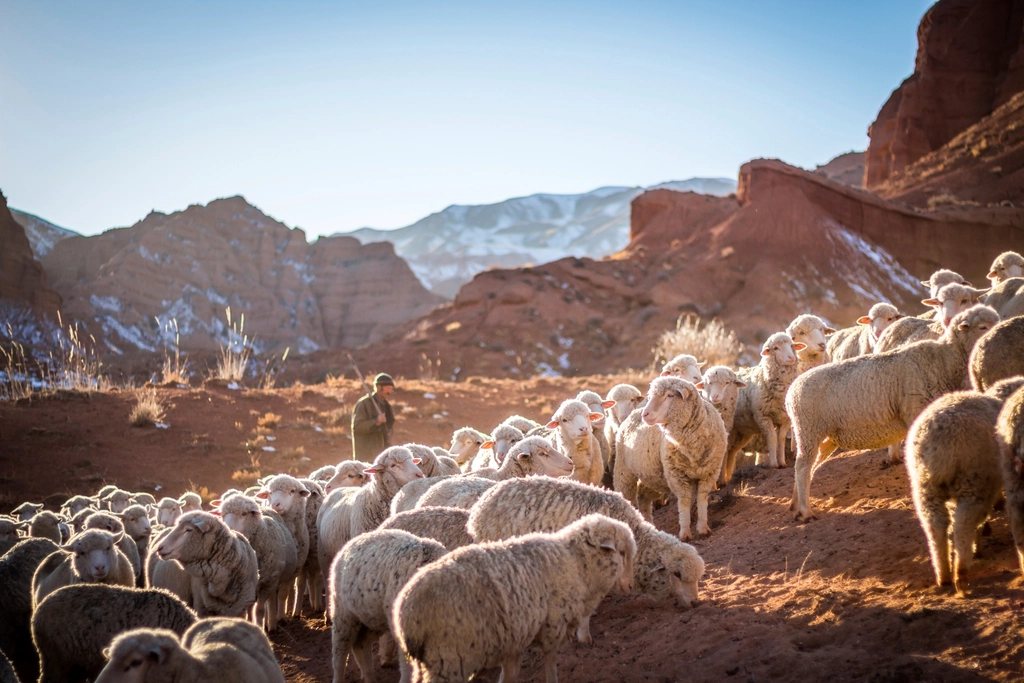
The first thing you notice at Song Kul is not the lake. It is the silence, and then the horses, and then the fact that the horizon is so wide that the lake, 270 square kilometres of it, takes a while to register. Kyrgyzstan is a country where 90 percent of the land is mountain and where the summer still moves whole families and their herds up to high pastures called jailoo. Two of those pastures, Song Kul and the remote valley of Kel-Suu, are the reason we came, and the yurts pitched on them are where we slept.
The jailoo and the yurt: how the season works
From June to September, herding families leave the villages and take sheep, horses and yaks to the high grasslands. They live in yurts, round felt tents on a wooden lattice frame, and many of them now host walkers and riders for a night or two. Community networks in the valley towns arrange the stays, so the money goes to the family rather than to a middleman. A night usually includes dinner, breakfast, a stack of blankets and a bowl of kumis, the fermented mare’s milk that is the taste of the Kyrgyz summer. It is sour, slightly fizzy and an acquired taste, but refusing it is harder than drinking it.
There is no electricity beyond a solar panel for lights and phones, no running water and a pit toilet some distance from the camp. In exchange there is the biggest sky we have ever slept under.
Song Kul: the lake at 3,016 metres
Song Kul lies in the Naryn region, about 300 kilometres from Bishkek, in a broad basin at 3,016 metres. It is the second largest lake in the country and one of the highest. The water is shallow, the shore is grass rather than rock, and from November to May it freezes solid. In July the pastures around it hold dozens of yurt camps and thousands of animals.
The lake can be reached by road from Kochkor, the market town on the plain to the north, over one of three passes. The most rewarding approach is on foot or horseback. The classic route starts at the village of Kyzart, climbs over the Kyzart pass and drops to the summer pastures at Kilemche, where a family camp gives the first night. The second day crosses the Chaar-Archa pass at about 3,060 metres and descends to the lake shore. It is around 35 kilometres in two days, with a third day to walk the shore before a jeep collects you. Horses are the traditional option and cost little; walking beside them is just as good.
Kel-Suu: the lake at the end of the country
Kel-Suu is different, and harder. It sits at about 3,500 metres in the far south of the Naryn region, close to the border with China, and until recently almost nobody went. The lake fills a narrow canyon about 10 kilometres long between cliffs of grey limestone, and its level rises and falls with the season: in some years the water drains almost entirely through the rock in late summer, and photographs taken in July and September can look like two different places.
Because it lies in the border zone, a permit is required and must be arranged in advance through an agency in Naryn or Bishkek; it takes a few days and is checked at a military post on the road. The approach from Naryn is around 200 kilometres, mostly on rough gravel across the Ak-Sai valley, a day of driving through some of the emptiest country in Central Asia. Yurt camps sit in the Kok-Kiya valley below the lake, at about 3,300 metres, and from them the walk to the water is a gentle 8 kilometres up the valley floor. Boats sometimes run on the lake when it is full; when it is not, the canyon can be walked.
Altitude, weather and what to expect
Both lakes are high. Song Kul at 3,016 metres and Kel-Suu at 3,500 metres are well above the threshold where headaches and poor sleep begin, and most visitors arrive from Bishkek at 800 metres within a day or two. Walking in over two days, as on the Kyzart route, is a far gentler introduction than a jeep. Drink a lot, eat what you are given, and go slowly on the first afternoon.
The weather at this height is a summer that behaves like a mountain spring. July afternoons at Song Kul can reach 20 degrees; the nights drop to near zero, and snow in August is not unusual. Thunderstorms arrive fast from the west. A warm sleeping bag, even in a yurt, is not optional, and rain gear needs to be real.
Practical notes
Kochkor is the base for Song Kul, with guesthouses, a market and the offices where yurt stays, horses and drivers are arranged. Naryn is the base for Kel-Suu. Both are reached by shared taxi and minibus from Bishkek in four to six hours. Roads to the lakes are unpaved and impassable outside the season; the yurt camps at Song Kul open in June and pack up in September, and Kel-Suu is normally only visited from July to early September.
- Song Kul: 3,016 metres, 270 square kilometres; two-day walk from Kyzart over the Chaar-Archa pass.
- Kel-Suu: about 3,500 metres, 10 kilometres long; border-zone permit required, arranged in advance.
- Season: June to September for Song Kul; July to early September for Kel-Suu.
- Sleeping: family yurt camps with meals; bring a warm sleeping bag and a head torch.
- Water: filter or boil; livestock graze around every camp.
We left Song Kul at dawn, with the horses being saddled and the smoke from the stove pipes flat in the cold air, and understood why families come back every year. It is not comfort that draws them, or us. It is the space, the animals and the sense that for three months the whole country moves up into the sky and lives there.
Read next: Kazakhstan vs Kyrgyzstan: Which Central Asia Trek Fits You?