
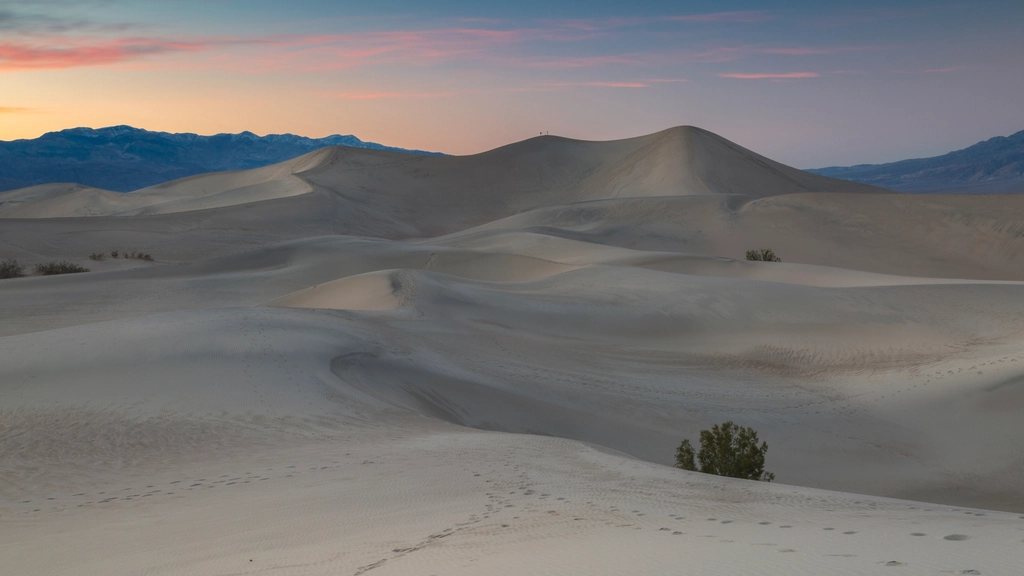
Nobody plans a desert trek around distance. They plan it around water, and the distance follows. On the southern Jordan Trail, the Sinai high ranges, the Anti-Atlas and the edges of the Sahara, the real map is a chain of springs, wells, cisterns and rock pools, with days of walking strung between them. We have learned this the slow way, arriving at a well that had been dry for two years and at a spring that had become a cattle trough. This article covers how we find water, how we make it safe, and how we make sure it is there when we arrive.
Reading the landscape for water
Wadis, the dry riverbeds that shape most of the desert country we walk, only flow after rain, but they store water in ways that reward attention. Water persists longest where the bed is bedrock rather than sand, in pools under overhangs shaded from the sun, and at the base of cliffs where a narrow slot canyon concentrates runoff. A line of green in a brown landscape, oleander and reeds in the Middle East, tamarisk and palms in North Africa, almost always marks water within a metre of the surface, even if none is visible.
The other reliable sign is people and animals. Goat and camel tracks converge on water like spokes on a hub. A stone-lined cistern or a well with a rope and a rubber bucket is usually within an hour’s walk of a settlement, and the settlement knows whether it is drinkable. In Wadi Rum and the Dana area of Jordan, and in the Draa valley of Morocco, the springs used by shepherds have been used for millennia and are marked, if not on our maps, then in the memory of anyone we ask.
What is actually in desert water
Clear water is not clean water. The pools and wells we rely on are shared with livestock, wildlife and, sometimes, other walkers who were careless. The main risks are bacteria from animal waste, protozoa such as giardia and cryptosporidium, and, in populated areas, viruses. Desert water also tends to be mineral-heavy: slightly salty, sulphurous, or so hard it tastes metallic. Salinity cannot be filtered out with anything a walker can carry, and a well that tastes strongly of salt should be treated as unusable for drinking, however inviting it looks.
Stagnant pools with a green surface film or a strong smell are a last resort. Moving water and shaded rock pools that are refilled by rain are much better. Wells that are covered and in daily use by a village are generally the safest natural source in the desert, precisely because people depend on them.
Making it safe: what we carry
We use three methods in combination, because each one has a gap:
- A hollow-fibre filter, which removes bacteria and protozoa but not viruses or salt, and which clogs quickly in silty water unless pre-filtered through a cloth
- Chemical treatment with chlorine dioxide tablets or drops, which handles viruses and bacteria and, with a four-hour wait, cryptosporidium; it does nothing for silt or taste
- Boiling, which handles everything biological, costs fuel and time, and is what we fall back on for a suspect source or when a filter fails
In practice we filter cloudy water through a bandana, then through the hollow-fibre filter, then add a chemical dose for the viral gap if the source was near people. Ultraviolet pens work well in clear water but poorly in cloudy water and depend on batteries, which in 45 degree heat and fine sand have a short life. Filters must never freeze; on winter nights in the Sinai or the high Atlas, the filter sleeps inside a sleeping bag.
Whatever the method, the untreated water and the treated water live in different containers, and the thread of a bottle that has held dirty water is treated as dirty. Most desert stomach illness we have seen came not from the source but from a bottle cap.
Caches: when the map has no water at all
Some sections simply have no dependable source for 40 to 60 kilometres. Parts of the Wadi Araba section of the Jordan Trail, the crossing from the Anti-Atlas to the Sahara plateau, and long traverses in Wadi Rum are like this. The answer is a cache, and there are two ways to make one.
The first is a vehicle drop: a local driver leaves sealed containers at an agreed point, usually a track crossing or a named rock, a day or two before. We give a GPS coordinate, ask for a photograph of the cache with a recognisable landmark, and bury or shade the containers against heat and against goats, which will chew through plastic. The second is a self-laid cache, walked in on a day trip from a road and hidden the same way. Either way, we carry enough to reach the cache and survive a day beyond it in case it has gone, and we never pass a cache without checking every container.
Caches are also an ethical question. Containers left in the desert become rubbish. We collect every one on the way through, or arrange for the driver to do so, and we never leave a cache in a canyon that might flood.
How much to carry and when to drink
Between sources, the arithmetic is unforgiving: roughly one litre per hour of walking in serious heat, more with a heavy load, plus two litres for the evening and morning. A 30 kilometre day between two known springs, walked in the cool hours, works out at around six litres per person. A 50 kilometre gap with an overnight means ten to twelve litres, and that weight means a cache or a mule rather than a bigger pack.
We drink to a schedule rather than to thirst, about 300 millilitres every half hour while walking, and we drink most at the source itself: a litre on arrival, a litre before leaving, so that the pack carries what the body cannot. Water that is treated at the source is also cooler, and in the desert a cool litre is drunk and a hot litre is sipped.
The wadi as a hazard
The same wadi that promises water can deliver far too much of it. Flash floods in the Sinai, the Negev and the sandstone canyons of southern Jordan arrive from rain that fell hours earlier and tens of kilometres away, under a clear sky. Narrow canyons like the ones that hold the best pools are exactly where a flood is lethal. We never camp on a wadi floor in the rainy months, October to March in the Levant, and we leave any slot canyon at the first sound of running water or the first change in the colour of a stream. Water is the desert’s only currency, and, as everywhere, it is dangerous in both scarcity and surplus.