
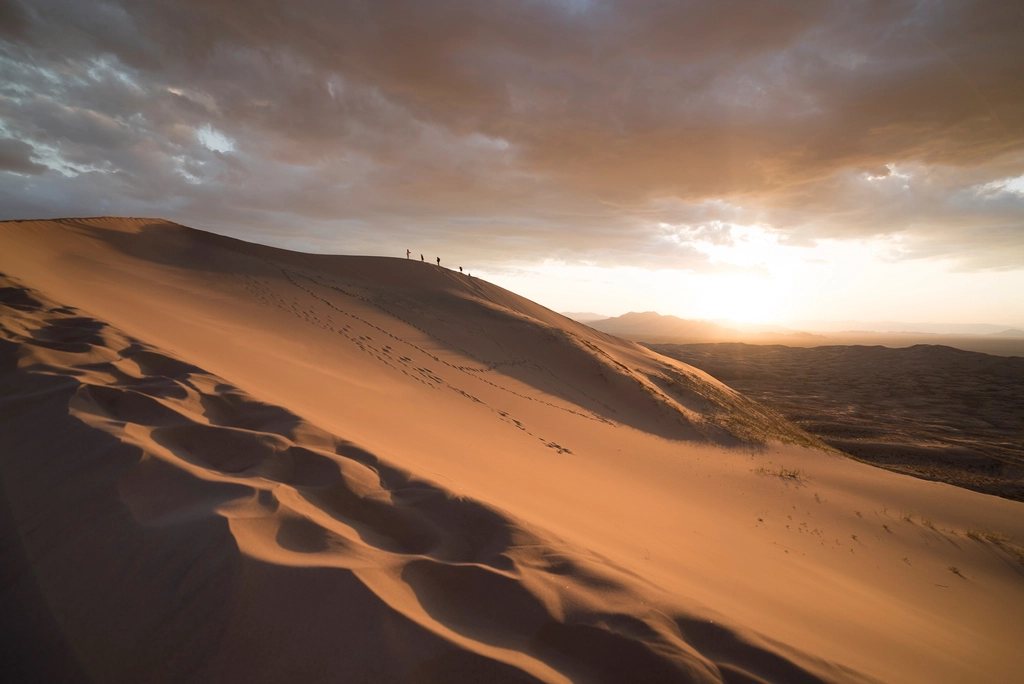
The first time we walked the southern sections of the Jordan Trail in May, the thermometer on a pack strap read 41 degrees by eleven in the morning. Nothing about that number felt dangerous at first. The air was dry, the sky was clear, and we had water. By two in the afternoon one of us had a pounding headache, another had stopped sweating, and the day had quietly become a rescue of ourselves rather than a walk. That afternoon taught us more about heat than any manual. This article is what we now do differently, from the Sahara fringes of the Anti-Atlas to the lowland sections of the Simien Mountains and the summer valleys of Kyrgyzstan.
Why 40 degrees is a different sport
At 20 degrees the body sheds heat easily through the skin. At 35 degrees and above, air is warmer than skin, so the only route left is evaporation of sweat. A walking adult in full sun can lose one to one and a half litres of sweat per hour, and in very dry air that sweat vanishes before you notice it. The result is that dehydration sneaks up on people who feel fine. Add a pack of 12 to 15 kilograms and the metabolic heat of walking uphill, and core temperature can climb faster than thirst can warn you.
There is a second, less obvious trap. Sweat carries salt, mostly sodium. Drinking large volumes of plain water while sweating heavily dilutes the blood, and in extreme cases produces hyponatraemia, which mimics heat exhaustion: nausea, confusion, headache. Two of the most common desert mistakes are therefore opposites: not drinking enough, and drinking too much water with too little salt. We plan for both.
How much water, really
Our working figure for a full day of walking at 35 to 42 degrees is six to eight litres per person, including what goes into meals. That sounds enormous until you weigh it: eight litres is eight kilograms, which is why timing and resupply matter more than carrying capacity. On the Wadi Rum and Wadi Araba stretches of the Jordan Trail, where villages and springs can be 25 to 30 kilometres apart, we have walked with five litres each and pre-arranged water at the next camp rather than trying to carry two days at once.
The rule we use in the field is simple: urine should be pale straw coloured at every stop. Dark urine, or no urge to urinate for four hours while walking, means we are already behind and we stop, rest in shade and drink slowly for twenty minutes before moving. Catching up on a deficit while walking rarely works, because the gut absorbs only around 800 millilitres to one litre per hour.
We also drink before we start: half a litre with breakfast, and another half litre in the last thirty minutes before leaving camp. Starting hydrated buys the first two hours of the day.
Salt, electrolytes and food that does the job
Sweat contains roughly 0.5 to 1.5 grams of sodium per litre, depending on how acclimatised you are. Heavy sweaters on unfamiliar heat lose the most. Over an eight-litre day that can be five to ten grams of sodium, far more than a normal diet provides. We add electrolytes to about half of what we drink, aiming for a mildly salty taste rather than a sweet drink. A quarter teaspoon of table salt and a spoon of sugar in a litre of water is a workable emergency version.
Food matters as much as tablets. Local staples in the regions we walk are quietly ideal: salted nuts and dates in Jordan and Morocco, injera and lentils in Ethiopia, salted dried fruit and bread in the Caucasus and Central Asia. We eat small amounts every hour rather than a large lunch, because a heavy meal in the heat pulls blood to the gut and makes the afternoon worse.
Timing the day around the sun
The single most effective heat strategy is not equipment. It is the clock. Between roughly 11:00 and 15:30 in summer, ground temperatures in a rock wadi or on a black lava field can exceed 55 degrees, and radiated heat from rock adds to the air temperature. We treat those hours as non-walking time whenever the route allows.
A typical hot-season day for us looks like this:
- 04:30 wake, eat, drink; walking by 05:15 in the pre-dawn cool, when it can be 15 degrees cooler than midday
- 05:15 to 10:30 the main distance of the day, usually 15 to 20 kilometres, with a short break every hour
- 10:30 to 15:30 shade, food, sleep, sorting gear; a tarp or an overhang, never a closed tent
- 15:30 to 18:30 a second shorter walk of 6 to 10 kilometres to camp or water
- Camp before dark, dinner with extra salt, at least a litre of fluid before sleeping
On Kilimanjaro or in the Simien Mountains, where the heat is mostly a lowland problem on the approach days, we apply the same split to the first day or two and then relax it as the altitude rises. In the Atlas, a start at first light from a village at 1,800 metres means reaching the pass before the valley below turns into an oven.
Shade, clothing and the myth of stripping down
Bare skin in 40 degrees is a mistake. Direct sun on the skin adds heat and burns, and burned skin sweats poorly for days. We walk in loose, light-coloured, long-sleeved shirts and long trousers, a wide-brimmed hat, and a neck cover. Wetting the shirt and hat at any spring is worth doing even if it means using drinking water sparingly, because evaporation from fabric cools without costing sweat.
Shade is worth walking for. On several Jordan Trail sections we have added a kilometre to reach a canyon wall or a lone tree for the midday stop. On open plateau, a lightweight tarp strung between trekking poles gives enough shade for two people to lie down and drops the felt temperature by several degrees.
Recognising trouble and turning back
Heat exhaustion looks like this: heavy sweating, pale clammy skin, dizziness, nausea, cramps. It is treated by shade, rest, cool water on the skin, and slow drinking with salt. Heat stroke is different and is a medical emergency: hot skin that may be dry, confusion, slurred speech, staggering, a core temperature above 40 degrees. Cooling has to start immediately with water, wet cloth and fanning, and the person must be evacuated, not walked out.
We keep one honest rule. If anyone in the group stops sweating, becomes confused or cannot answer a simple question clearly, the day is over, wherever we are on the map. In the regions this magazine covers, the distances between help are long enough that the only real safety margin is the decision made early. Forty degrees can be walked in, and walked in well. It just cannot be walked in on the same schedule as a spring day in the Caucasus.