
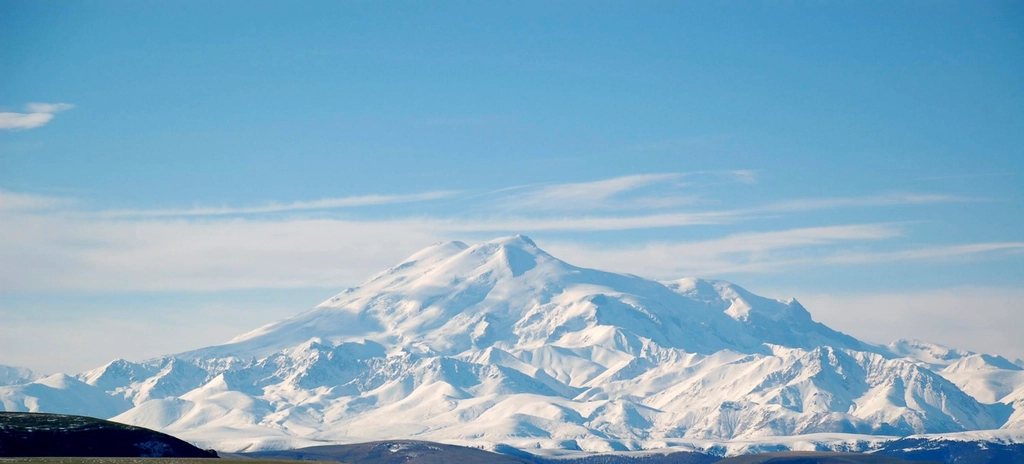
Mount Kenya is the quieter, sharper sibling of Kilimanjaro, 320 km to the north and almost exactly on the equator. Its true summits, Batian at 5,199 m and Nelion at 5,188 m, are rock climbs and out of reach for walkers. The third summit, Point Lenana at 4,985 m, is not: it is a steep walk over scree and a short rocky ridge, and it is the reason the mountain deserves a place on any list of African treks. The classic way to do it is up the Sirimon route on the north-west side and down the Chogoria route on the east, four or five days that cross the whole mountain and, in our view, offer better scenery per kilometre than anything on Kilimanjaro.
The mountain and its moods
Mount Kenya is an extinct volcano roughly three million years old whose central plug has been carved by glaciers into the spires you see from the plains. A ring of national park protects everything above about 3,200 m, with a forest reserve below it, and the massif has been a UNESCO World Heritage Site since 1997. Because it straddles the equator, the mountain has two dry seasons rather than one: mid-December to mid-March and July to early October. The long rains fall from late March into June and the short rains through November. In the dry months the mornings are usually clear until about ten o’clock, cloud builds through the afternoon, and the nights above 4,000 m drop well below freezing. The Lewis Glacier below Point Lenana has shrunk by more than 90 percent in a century and is now a stub of grey ice.
Sirimon: the gentle way up
The Sirimon Gate lies at 2,650 m on the north-west flank, about 15 km from the town of Nanyuki. The first stage follows a vehicle track through cedar and bamboo forest to Old Moses Camp at 3,300 m, 9 km and a comfortable half day. This is also the stretch where elephant and buffalo are most likely, and the reason the park asks you not to walk the forest alone.
The second day is the one that makes the route. From Old Moses the path climbs through open moorland, crosses the Liki North valley and drops into Mackinder’s Valley, a long glacial trough lined with giant groundsels and lobelias that look as if they were designed for a different planet. Shipton’s Camp sits at the head of the valley at about 4,200 m, 14 km and 900 m higher than Old Moses, directly beneath the north face of Batian. Most walkers arrive with a mild headache; a rest afternoon here, or a short acclimatisation climb towards the ridge above camp and back, is time well spent.
Summit morning on Point Lenana
The summit push leaves Shipton’s around three in the morning so as to reach the top for sunrise, before the cloud arrives. The route climbs about 780 m over 4 km: a steady zigzag on scree to Harris Tarn at roughly 4,700 m, then a steeper, rockier line to the north ridge of Lenana and a short scramble to the summit cairn. Nothing requires hands for more than a moment in dry conditions, but the ground can carry snow or verglas at any time of year and in the wet season the final ridge becomes serious. Three to four hours is typical. From the top, on a clear morning, Kilimanjaro floats above the haze to the south and the whole eastern side of the mountain drops away towards the Gorges Valley.
Chogoria: the spectacular way down
Descending east from Point Lenana takes you first to the Austrian Hut at about 4,790 m, then down past Square Tarn and along the rim of the Gorges Valley, the most dramatic ground on the mountain. The valley is a 1,000 m deep trench of cliffs, hanging waterfalls and the shining oval of Lake Michaelson at 3,950 m, which some itineraries visit on a detour of a couple of hours. The path continues over Minto’s Hut area at about 4,300 m, drops to Lake Ellis at 3,470 m, a beautiful camp, and reaches the Chogoria roadhead at about 3,000 m the following morning. From there it is roughly 30 km of forest track down to the town of Chogoria on the eastern side; vehicles usually meet walkers at the roadhead or at the gate a few kilometres lower.
Taken in this direction, the whole traverse from Sirimon Gate to the Chogoria roadhead is a little over 50 km on foot with about 2,700 m of ascent, spread over four days with a summit at dawn on the third. Five days, adding a night at Lake Ellis or Lake Michaelson, is more comfortable and lets you enjoy the descent rather than survive it.
Altitude, gear and the rules
The acclimatisation profile is far kinder than on Kilimanjaro but still quick: sleeping at 3,300 m, then 4,200 m, then standing at 4,985 m within 48 hours of leaving the gate. Anyone who has struggled above 4,000 m before should add a night at Old Moses or at the Liki North hut on the way up. Water is plentiful on both routes but should be treated, and the moorland offers no shelter from lightning, which is a real hazard in the afternoons of the wet months.
- Sleeping bag rated to about minus 10 degrees C; nights at Shipton’s are consistently below freezing.
- Waterproof jacket and trousers even in the dry season; the equator does not read the calendar.
- Walking poles for the scree above Shipton’s and the long knee-jarring drop into the Gorges Valley.
- Head torch with fresh batteries for the summit start and a warm hat you can wear under the hood.
Park entry is charged per person per day and paid at the gate, with additional camping fees; the two gates are on different sides of the mountain, so a traverse needs transport arranged at both ends. Guides are not legally compulsory for walkers, but the park strongly recommends them, and porters and a cook turn a hard four days into a very good one. Most guides come from the villages around Naro Moru, Nanyuki and Chogoria and know the mountain in every season, which matters when the summit ridge is iced.
Why Mount Kenya first
If Kilimanjaro is on your list, walk this mountain before it. The summit is 900 m lower but the scenery is wilder, the camps are quieter, the flora is stranger, and you will learn what your body does at 4,000 m without betting a week’s budget on the answer. If Kilimanjaro is not on your list, walk it anyway. Sunrise on Point Lenana, with the twin spires of Batian and Nelion turning pink a few hundred metres away, is one of the great sights of the continent, and it costs four days.