
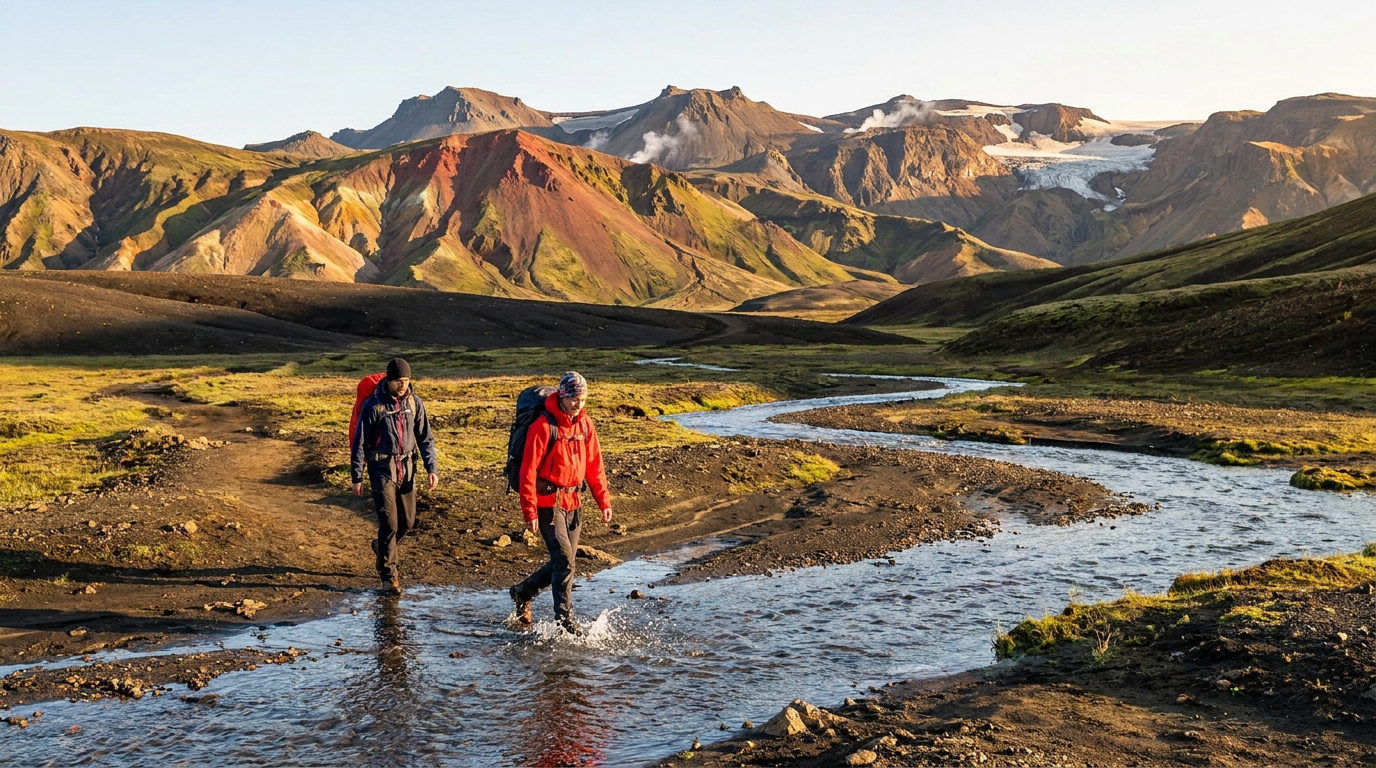
Key takeaway: Successfully navigating the 55-kilometer Laugavegur Trail requires booking mountain huts up to nine months in advance and using specialized 4×4 Highland buses. This preparation ensures safe passage through unpredictable subarctic weather between June and August. Notably, hikers must cross glacial rivers and traverse rhyolite peaks, making physical endurance and waterproof gear essential for this four-day Icelandic wilderness crossing.
The Laugavegur Trail covers 55 kilometers of raw geological power, stretching from the rhyolite mountains of Landmannalaugar to the glacial sanctuary of Þórsmörk. This crossing represents one of the most intense encounters with Iceland’s volcanic activity and subarctic wilderness.
Many hikers underestimate the preparation required, often finding that securing hut reservations well in advance is as challenging as the trek itself. We provide the essential logistics and safety protocols to help you successfully navigate this four-day journey between fire and ice.
- Logistics for the Laugavegur Trail Iceland
- Four Days Between Fire and Ice
- Equipment Selection and Fitness Preparation
- Safety Protocols and Environmental Stewardship
Logistics for the Laugavegur Trail Iceland
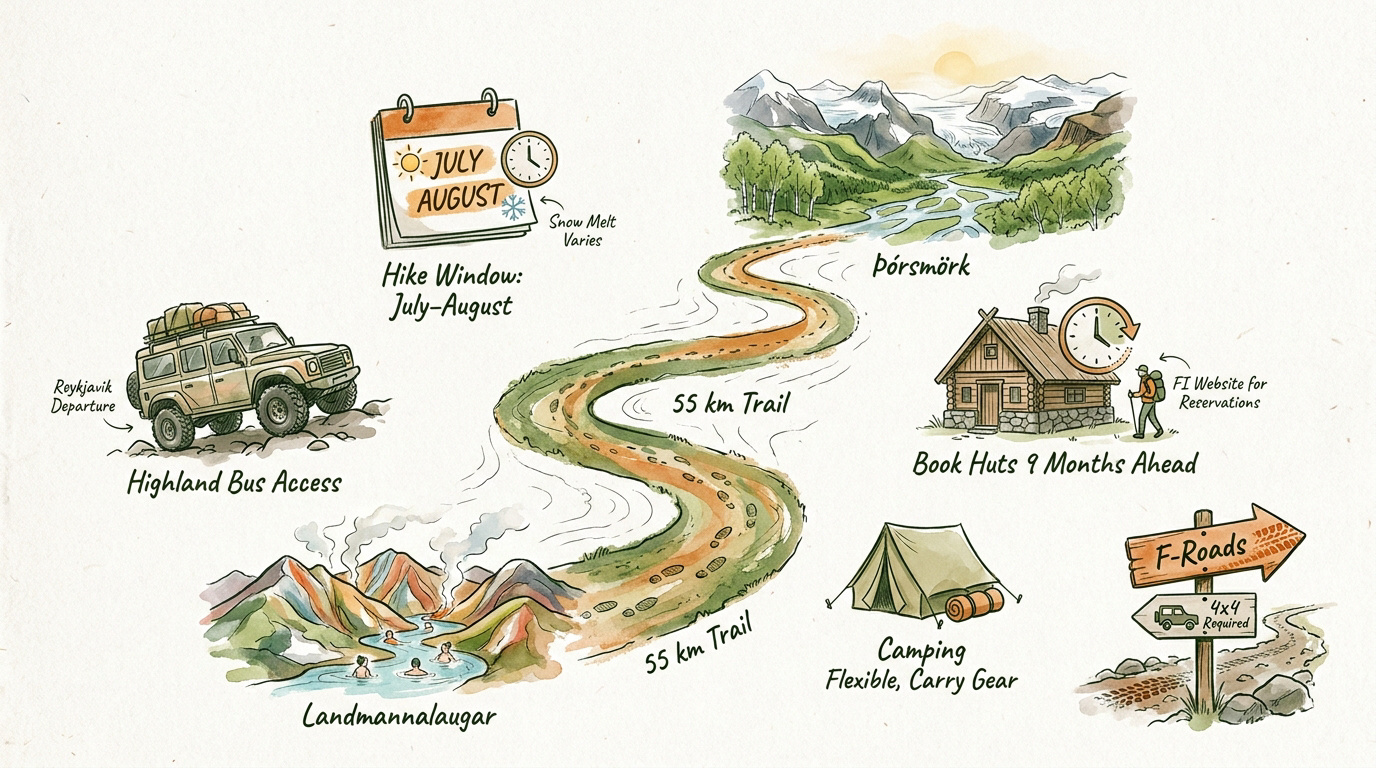
The Laugavegur Trail spans 55 kilometers between Landmannalaugar and Þórsmörk, requiring 4×4 bus transport and mountain hut bookings many months ahead. Hiking is largely confined to the summer months due to Highland snow conditions.
Getting your transport sorted is the first real hurdle before you even step foot on the volcanic soil.
Transport Options to Highland Trailheads
Reykjavik Excursions and Trex run specialized Highland buses from Reykjavik starting mid-June. These vehicles handle rugged F-roads and river crossings that would destroy a standard car. Routes usually open late June once the snow melt stabilizes.
Driving yourself is risky without serious mountain experience. Public buses remain the most reliable way to reach Landmannalaugar safely.
Once you know how you’re getting there, you need to figure out where you’ll sleep each night.
Securing Hut Reservations Months in Advance
Compare Ferðafélag Íslands huts with camping zones. Huts offer beds but book up many months early. Camping is flexible but requires carrying heavy weather-proof tents.
All sites provide shared kitchens and paid showers. You must bring your own sleeping bag for hut dormitories. Always confirm your reservation via the official FI website.
With your bed secured, the next challenge is picking the right moment to face the elements.
Timing the Trek for the July-August Window
Peak summer offers the most stable weather conditions. Snowfields often persist on the Hrafntinnusker plateau until late July. Plan for long daylight hours to maximize your hiking time.
Subarctic summers are unpredictable and often very windy. Checking the seasonal opening dates is mandatory for safety. Avoid early June starts to bypass dangerous slushy snow.
Four Days Between Fire and Ice
Once the logistics are settled, the focus shifts to the dramatic geological transition from rhyolite mountains to glacial valleys.
Traversing Rhyolite Peaks and Obsidian Fields
The climb from Landmannalaugar reveals the multicolored rhyolite peaks of Brennisteinsalda. Geothermal vents release steam along the obsidian-strewn path. This section is the highest and coldest part of the entire trek. The Laugavegur Trail: Iceland’s 55-Kilometre Crossing Between Fire and Ice starts here with intensity.
Explore hidden ice caves near Hrafntinnusker if conditions allow. These side hikes offer incredible views of the volcanic landscape.
Watch for fog here. Navigation becomes difficult without clear trail markers.
Trekking Through Hvanngil and Emstrur Deserts
Descend into the Alftavatn lake area for a change in scenery. The volcanic plains of Maelifellssandur stretch toward the horizon. Black sand deserts contrast sharply against neon green mountains.
Approaching Emstrur reveals the massive Markarfljot canyon. The trail follows the rim of this deep, jagged gorge. It is a highlight for photographers seeking dramatic Icelandic scale.
The terrain is flat. Walking on volcanic ash feels like another planet.
Finishing the Crossing in Birch Forests
The final leg enters the lush Thorsmork valley. This area enjoys a unique microclimate protected by glaciers. Arctic birch forests provide a rare sight in the Highlands.
Recover at the Volcano Huts with a warm meal. Many hikers extend their trip via the Fimmvorduhals trail to Skogar. This adds another day of intense volcanic scenery.
Celebrate your arrival. The valley offers great shelter from highland winds.
Equipment Selection and Fitness Preparation
Preparing for the Laugavegur Trail: Iceland’s 55-Kilometre Crossing Between Fire and Ice is far more than a simple packing exercise; it is a serious logistical challenge where your gear choice determines your safety. Most hikers underestimate the sheer volatility of the Icelandic highlands until they are standing in a horizontal rainstorm.
Waterproof Shells and Synthetic Layering Systems
Invest in high-quality hardshells to block horizontal rain. Avoid cotton at all costs because it stays wet and cold. Use merino wool or synthetic base layers for moisture management. Sturdy waterproof boots are essential for scree.
Layering allows you to adapt to sudden temperature shifts. Always keep a dry set of clothes in a waterproof bag.
Gaiters help in snow. They also keep volcanic sand out of boots.
Managing Food Weight for Four Days
Transitioning from gear to sustenance, managing your pack’s mass is the next hurdle for any self-respecting trekker.
Choose calorie-dense dehydrated meals to save pack weight. You must carry all food as there are no resupply points. Pack high-energy snacks like nuts or chocolate for trail breaks.
Potable water is available at every mountain hut location. You do not need to carry a heavy filter system. Bring a reusable bottle to refill at each stop.
Fuel canisters are necessary. Buy them in Reykjavik before heading out.
Building Endurance for Long Highland Days
Even the best equipment won’t save you if your legs buckle under the weight of a four-day supply on uneven volcanic rock.
Train with a weighted pack for several months. Simulate actual trail conditions on hilly terrain nearby. Focus on steady endurance rather than peak hiking speed.
Practice back-to-back hiking days to build stamina. Cumulative fatigue is the biggest challenge on day three. Balance exercises help with uneven volcanic rocks and slippery scree.
Stretch your calves daily. The descent into Alftavatn is steep and taxing.
Safety Protocols and Environmental Stewardship
Physical fitness is only half the battle; understanding the safety risks and ecological rules is what ensures a successful trek.
Reading Glacial Streams Before Wading Through
Unbuckle your backpack waist strap before entering any river. This allows you to shed the pack if you fall. Use trekking poles for stability in the fast current. Always cross where the water is widest and shallowest.
Cross early in the morning when glacial melt is lowest. Water levels rise significantly during warm afternoons or heavy rain.
Never cross alone. Wait for other hikers to ensure mutual safety.
Interpreting Vedur Forecasts for Safe Passage
Check the Vedur.is website daily for localized weather updates. Whiteouts and thick fog are common on the high plateaus. Visibility can drop to zero within minutes in the Highlands.
Use the SafeTravel.is check-in system for solo trekking. This helps search and rescue teams if you go missing. Always follow the advice of hut wardens regarding daily departures.
Carry a GPS. Markers can be hidden by sudden summer snow.
Respecting Fjallabak Nature Reserve Rules
Stay on marked paths to protect fragile arctic moss. This vegetation takes decades to recover from a single footprint. Wild camping is strictly prohibited within the nature reserve boundaries.
Follow a strict ‘leave no trace’ policy for all waste. Carry out everything you carry in, including organic scraps. The Highlands hold deep cultural significance for the Icelandic community.
Respect the silence. Noise pollution disturbs both wildlife and fellow hikers.
Mastering the 55-kilometre Laugavegur Trail requires rigorous fitness, early hut bookings, and specialized waterproof gear. Prepare thoroughly for Iceland’s volatile highlands to ensure a safe crossing between volcanic peaks and glacial valleys. Secure your transport now to experience this transformative journey through fire and ice before the short summer window closes.
FAQ
What are the best ways to get to the Laugavegur trailheads by bus?
The most reliable way to reach the trail is via specialized Highland buses operated by Reykjavik Excursions and Trex. These vehicles are specifically designed for rugged F-roads and river crossings, departing from Reykjavik to reach Landmannalaugar or Þórsmörk in about four to five hours.
It is highly recommended to book your seats well in advance, especially for the peak July and August window. Buses generally arrive at Landmannalaugar in the early afternoon, giving you the flexibility to either start your first hike immediately or settle into the camp for the night.
How do I secure a spot in the mountain huts along the trail?
Reservations for the mountain huts managed by Ferðafélag Íslands (FI) are essential and often fill up many months in advance. You must now book an entire itinerary through their online system, which provides a live availability calendar for the dormitories.
If the huts are fully booked, camping is a viable alternative that does not require prior reservations. While campers cannot use the hut kitchens, they do have access to drinking water and toilets at each site for a fee, offering more flexibility for your schedule.
When is the ideal time of year to hike from Landmannalaugar to Þórsmörk?
The hiking season is strictly limited to the summer months, generally from late June to early September. This is when the Highland roads are officially open and the mountain huts are fully operational to welcome trekkers.
July and August offer the most stable weather and the longest daylight hours, though you should still prepare for unpredictable conditions. Outside of this window, heavy snow and lack of transport make the trail dangerous and largely inaccessible for standard trekking.
What kind of weather should I expect during a July or August trek?
Expect highly variable conditions, ranging from bright sunshine to heavy rain and thick fog within the same day. Average temperatures typically fluctuate between 5°C and 15°C, though high-altitude plateaus like Hrafntinnusker can remain much colder and windier.
Rain is frequent throughout the Highlands, so high-quality waterproof shells and synthetic layers are mandatory. Always check the localized Vedur.is forecasts daily, as visibility can drop rapidly, making navigation across snowfields and obsidian deserts difficult.
Is it possible to have my heavy luggage transferred between stops?
Yes, luggage transfer services are available for those who prefer to hike with only a light daypack. These services transport your main bags between the designated hut locations, allowing you to save energy for the steep climbs and river crossings.
Utilizing a transfer service can significantly improve comfort, but you must still carry essential safety gear, water, and emergency layers with you at all times. Be sure to check the specific pickup times and costs with the service providers before you begin your journey.
How difficult are the river crossings on the Laugavegur Trail?
The trail requires several unbridged river crossings that vary in depth depending on recent rainfall and glacial melt. It is safest to cross early in the morning when water levels are at their lowest and to use trekking poles for added stability in the current.
Before entering the water, always unbuckle your backpack’s waist strap so you can discard it quickly if you lose your footing. Never attempt to cross alone; waiting for other hikers ensures that someone is there to assist if the current proves stronger than expected.